

For decades, nutrition guidance from the U.S. Department of Health and Human Services has been built around simplifying food into numbers—calories, fat grams, percentages, and macros.
But that framework hasn’t produced the outcomes many expected.
Despite widespread adherence to low-fat and calorie-focused recommendations, chronic disease has continued to rise. This has prompted a meaningful shift in how nutrition is being viewed at a broader level.
What’s emerging now is less about a “new” idea, and more about a return to a foundational principle:
Food quality matters.
I am THRILLED that the message I’ve been sending for over a decade in practice is finally going mainstream.
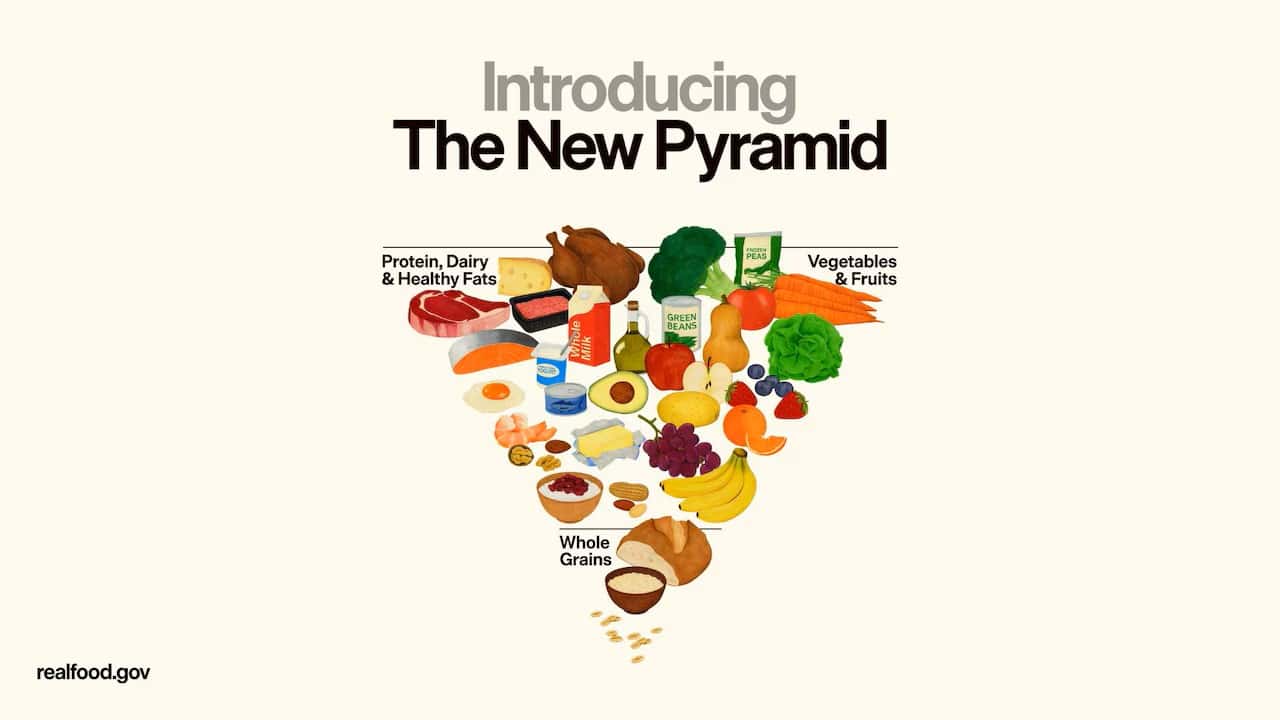
What Is the “New Food Pyramid”?
The concept of a food pyramid isn’t new but how it is being structured is evolving.
Instead of placing carbohydrates or grains as the foundation, the newer model emphasizes:
- Protein as a central anchor
- Natural fats from whole foods
- Vegetables and fruits for micronutrients and fiber
- Whole, minimally processed foods overall
- Less reliance on refined grains and ultra-processed products
This represents a clear departure from earlier models that prioritized low-fat intake and higher carbohydrate consumption—often from processed sources.
Why the Shift Matters
Recent dietary guidance is moving away from focusing solely on nutrients in isolation and instead emphasizing how foods function within the body.
This includes recognizing that:
- Whole foods provide nutrients in forms the body can efficiently use
- Ultra-processed foods can disrupt appetite regulation and energy balance
- Dietary patterns—not just individual nutrients—drive long-term outcomes
In other words, two diets with similar calorie counts can have very different effects on metabolism, energy, and overall health depending on food quality.
A Closer Look at the Updated Priorities
- Protein Is Foundational
Protein is now being emphasized as a key component of each meal.
Adequate protein intake supports:
- Muscle maintenance and strength
- Metabolic health
- Satiety and appetite regulation
For many individuals, particularly as they age, protein needs are often higher than previously emphasized.
- Natural Fats Are No Longer the Enemy
Earlier guidance often grouped all fats together and encouraged minimizing intake.
Current thinking differentiates more clearly between:
- Whole-food fats (e.g., dairy, eggs, meat, minimally processed oils)
- Highly processed industrial fats
Natural fats from whole foods can:
- Improve satiety
- Support nutrient absorption
- Contribute to more stable energy levels
- Ultra-Processed Foods Are a Primary Concern
One of the most significant shifts is the direct acknowledgment of the role ultra-processed foods play in long-term health.
These foods often contain:
- Additives and preservatives
- Refined carbohydrates
- Added sugars
- Highly engineered combinations designed to increase intake
Rather than simply advising moderation, current guidance is increasingly pointing toward reducing reliance on these foods altogether.
- Carbohydrates Are Context-Dependent
Carbohydrates are no longer viewed as inherently beneficial or problematic, they are evaluated based on source and processing.
Higher-quality carbohydrate sources include:
- Vegetables
- Fruits
- Legumes
- Whole grains (when tolerated and appropriate)
Refined carbohydrates, particularly in packaged foods are being more clearly associated with negative metabolic effects.
- Individualization Matters
Another important shift is the recognition that there is no single perfect diet for everyone.
Factors such as:
- Age
- Activity level
- Metabolic health
- Body composition goals
…all influence what an optimal intake looks like.
This moves away from rigid templates and toward a more personalized approach.
What This Looks Like in Practice
Rather than focusing on strict rules, this model is best applied through simple, consistent patterns:
- Build meals around a quality protein source
- Include natural fats to support satiety and nutrient absorption
- Add vegetables and/or fruits for fiber and micronutrients
- Choose whole or minimally processed foods whenever possible
This approach tends to support:
- More stable energy
- Better appetite regulation
- Improved long-term adherence
A Note on Accessibility
While this shift toward food quality is meaningful, it also highlights an important reality:
Higher-quality foods are not always the most accessible or affordable.
Research continues to show that lower-cost products tend to contain more additives, sugar, and sodium—creating a gap between what is recommended and what is widely available.
This makes it even more important to focus on incremental improvements, rather than an all-or-nothing approach.
The Bigger Picture
The “new food pyramid” is less about a graphic and more about a shift in perspective.
It reflects a growing recognition that:
- Food is not just fuel, it is information for the body
- Quality influences how that information is processed
- Long-term health is shaped by consistent dietary patterns over time
As this understanding continues to evolve, it provides an opportunity to move away from overly simplified nutrition advice and toward something more practical and sustainable.
Where to Start
If you’re looking to apply this approach, start with one or two changes:
- Increase protein at breakfast
- Replace one processed snack with a whole-food option
- Upgrade a staple ingredient (such as cooking fats or dairy)
- Pay attention to how meals affect energy and hunger
These small shifts tend to build momentum without becoming overwhelming.
Final Thought
The conversation around nutrition is changing but the fundamentals are becoming clearer.
Focusing on real, minimally processed foods, with adequate protein and supportive fats, provides a framework that is both grounded in current evidence and adaptable to individual needs.
If you found this helpful, you can subscribe to my newsletter where I break down these topics into practical, real-world strategies.